Introduction
Digital marketing for interior designers often begins with building a professional-looking website. Most interior designers naturally focus on visuals because interior design itself is a visual business. A stylish website feels important for creating a strong first impression.
That thinking is understandable.
A homeowner visiting an interior design website expects attractive layouts, clean project presentation, and a premium overall experience. Because of this, many interior designers spend a significant amount of time and money creating websites that look visually impressive.
But there is one major problem many designers eventually face.
The website looks beautiful, but inquiries still remain inconsistent.
This situation is more common than most people realize. Many interior designers have high-quality portfolios and professionally designed websites, yet they still struggle to generate regular client inquiries online.
In most cases, the issue is not design quality.
The issue is that the website focuses more on impressing visitors than helping them make decisions.
That difference matters a lot in digital marketing for interior designers.
Homeowners visiting your website are not only looking for inspiration. They are also trying to understand whether your business feels trustworthy, relevant to their requirements, and easy to work with. If a website creates confusion instead of clarity, people usually leave without contacting the business.
This is one of the biggest reasons many interior design websites fail to convert traffic into leads.
Why Digital Marketing for Interior Designers Often Fails
A common mistake in digital marketing for interior designers is assuming that attractive visuals alone are enough to generate inquiries.
Visual presentation definitely matters, but homeowners usually care about much more than aesthetics.
Before contacting a designer, most people are trying to answer practical questions such as:
- What type of interiors does this designer specialize in?
- Which locations do they serve?
- What kind of homes do they usually design?
- Is the designer suitable for my budget range?
- What happens after I make an inquiry?
- How easy is communication?
Many websites fail to answer these questions clearly.
Instead, visitors mainly see:
- large banners
- animations
- project galleries
- generic taglines
- minimal explanations
Everything may look polished, but the experience still feels unclear.
And when users feel confused online, they usually leave instead of exploring further.
This is why clarity often converts better than excessive creativity.
7 Powerful Website Mistakes That Reduce Interior Design Leads
1. Digital Marketing for Interior Designers Fails Without Clear Positioning
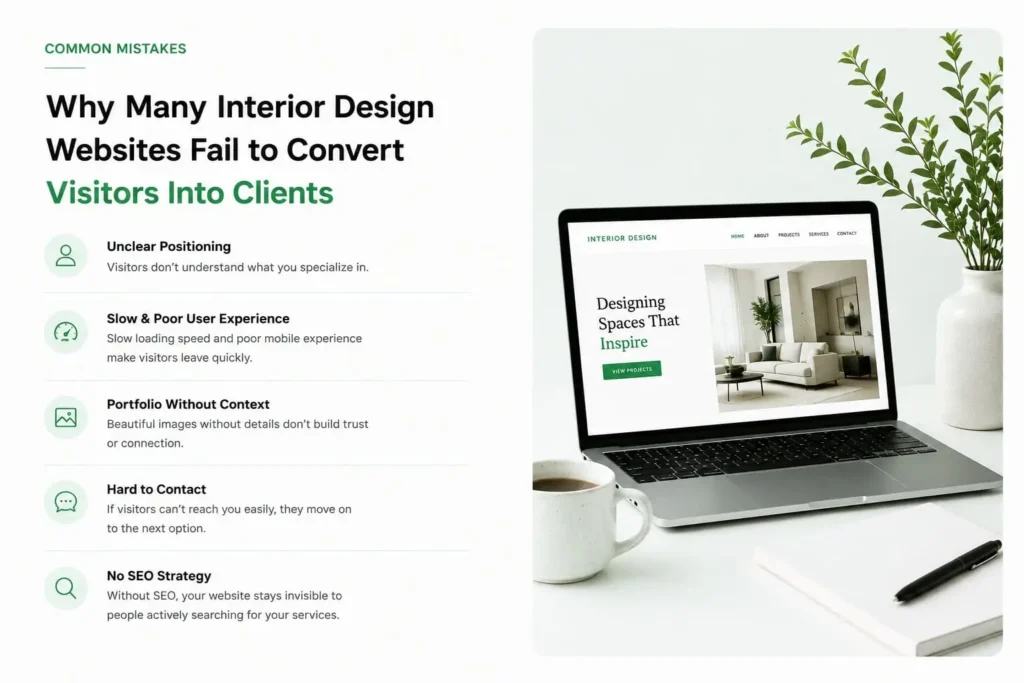
One of the most common problems is vague messaging.
Many websites use lines such as:
- “We create dream spaces.”
- “Transforming interiors beautifully.”
- “Complete interior solutions.”
These statements sound professional, but they do not clearly explain what makes the business different.
Specific messaging usually performs much better.
For example:
- Modern apartment interiors in Delhi NCR
- Luxury villa interior design services
- Space-saving interiors for urban homes
Specific positioning helps homeowners quickly understand whether your services match their needs.
It also improves:
- SEO relevance
- lead quality
- ad targeting
- inquiry conversion
2. Digital Marketing for Interior Designers Suffers From Slow Websites
Many interior design websites are overloaded with:
- large images
- animations
- sliders
- heavy effects
- videos
These elements often slow down the website significantly.
People browsing online are impatient. If a website loads slowly, visitors usually leave before exploring the portfolio properly.
Website speed also affects SEO performance.
According to Google Search Central, page usability and user experience influence long-term search visibility.
3. Digital Marketing for Interior Designers Needs Better Mobile Experience
Most homeowners now browse websites using mobile devices.
But many interior design websites are still designed mainly for desktop users.
As a result, mobile visitors often experience:
- cluttered layouts
- difficult navigation
- slow performance
- hidden buttons
- oversized images
A good mobile experience should feel simple, fast, and easy to use.
This matters because many users compare several interior designers within a short period. If your website feels frustrating, they quickly move to another option.
4. Digital Marketing for Interior Designers Cannot Rely Only on Portfolios
A portfolio is important, but portfolio images alone are usually not enough to build trust.
Many designers upload beautiful project photos without explaining anything about them.
Homeowners connect more strongly when projects include context.
For example:
| Project Detail | Why It Helps |
| Apartment type | Makes projects relatable |
| Location | Builds local trust |
| Budget category | Filters inquiries |
| Design style | Attracts the right audience |
| Client goals | Makes the project feel realistic |
A title like:
“Modern 3BHK Apartment Interior for a Young Family in Delhi NCR”
feels significantly more trustworthy than simply writing:
“Living Room Design.”
Specificity creates stronger connection.
5. Digital Marketing for Interior Designers Requires Clear Communication
Many websites unintentionally make communication difficult.
Sometimes visitors need multiple clicks just to find contact details. In other cases, inquiry forms ask for too much information upfront.
Every extra step creates friction.
And friction reduces inquiries.
Most homeowners simply want quick answers regarding:
- consultation
- pricing
- project timelines
- service locations
- availability
This is why WhatsApp works particularly well for interior designers. It feels direct, familiar, and convenient.
Businesses that respond quickly often generate stronger first impressions.
6. Digital Marketing for Interior Designers Needs SEO, Not Just Instagram
A large number of interior designers focus heavily on Instagram while ignoring SEO completely.
Instagram helps visibility, but many serious homeowners still search directly on Google before hiring a designer.
Common searches include:
- interior designer near me
- luxury apartment interiors
- modular kitchen designer
- apartment interior designer in Delhi
Without SEO, businesses often depend completely on referrals or paid ads.
Strong SEO helps interior designers appear when homeowners are actively searching for services.
Educational blog content also improves authority over time because useful content helps businesses appear more experienced and trustworthy.
Useful external resources:
7. Digital Marketing for Interior Designers Works Better With Trust-Building
This is one of the most important factors many businesses realize late.
People do not hire interior designers only because the website looks attractive.
They hire businesses they trust.
Trust usually comes from:
- clear communication
- organized presentation
- realistic project examples
- educational content
- responsiveness
- transparency
Sometimes a simpler website performs better simply because it feels easier to understand.
That clarity reduces uncertainty.
And reducing uncertainty is an important part of improving conversions.
Why Homeowners Leave Interior Design Websites Quickly
Many homeowners leave websites quickly because they cannot immediately understand:
- what the business specializes in
- whether the designer matches their requirements
- how the inquiry process works
- how to contact the business easily
This is especially true when websites focus too heavily on visual effects and too little on communication clarity.
A website should not only look premium.
It should also help visitors feel comfortable enough to take the next step.
Real-Life Example: Two Designers With Different Results
Imagine two interior designers operating in the same city.
The first designer has an expensive-looking website filled with cinematic banners, animations, and creative transitions. The website looks impressive visually, but the service categories are unclear, the mobile experience feels slow, and contact options are difficult to find.
The second designer has a simpler website.
But the website clearly explains:
- project types
- locations served
- consultation process
- pricing expectations
- communication method
The portfolio also includes practical explanations for each project.
In many real situations, the second designer generates more qualified inquiries despite having a less visually dramatic website.
The reason is simple.
The second website feels easier to trust.
That difference matters significantly in digital marketing for interior designers.
What Actually Helps Interior Designers Generate More Leads
Interior designers who consistently generate inquiries usually focus on:
- clear positioning
- SEO
- local visibility
- usability
- fast mobile experience
- trust-building
- organized project presentation
- easy communication
Small improvements often create meaningful results.
For example:
- improving CTA visibility
- simplifying navigation
- adding project descriptions
- organizing portfolio categories
- improving website speed
These changes improve usability, and usability strongly affects conversion rates.
FAQs
Why do many interior design websites fail to generate leads?
Most websites focus heavily on aesthetics while ignoring clarity, usability, trust, and conversion structure.
Does SEO really matter for interior designers?
Yes. Most homeowners search online before hiring an interior designer, which makes SEO important for long-term visibility.
Is Instagram enough for interior designers?
Instagram helps visibility, but depending only on Instagram usually creates inconsistent lead flow over time.
Why are landing pages important?
Landing pages focus on one specific goal, which usually improves inquiry conversion compared to general homepages.
What matters more: design or usability?
Both matter, but usability often influences conversions more directly because people prefer websites that feel easy to understand and navigate.
Final Thoughts
Digital marketing for interior designers is not only about building attractive websites.
It is about creating an online experience that helps homeowners feel confident enough to contact your business.
A good website should clearly explain:
- what type of projects you handle
- who your services are best suited for
- how your process works
- why people should trust your business
- how visitors can contact you quickly
The interior designers who consistently generate quality inquiries usually focus on clarity, communication, usability, SEO, and trust-building instead of relying only on visual presentation.
Because at the end of the day, homeowners are not simply searching for beautiful designs.
They are searching for confidence before making a decision.
Final CTA
If your interior design website is getting visitors but not enough inquiries, the issue is usually not just traffic. In many cases, small improvements in positioning, communication, SEO, and website structure can make a significant difference in lead generation.
At Digital Marketing for Interior Designer, we help interior designers build practical marketing systems focused on visibility, trust, and consistent inquiries instead of random marketing activities.
Whether you want to improve your website, generate better-quality leads, run Meta Ads, or strengthen your SEO strategy, the goal is simple — helping your business attract homeowners who are actively looking for interior design services.
Let’s understand your requirements and see what improvements can help your business grow.